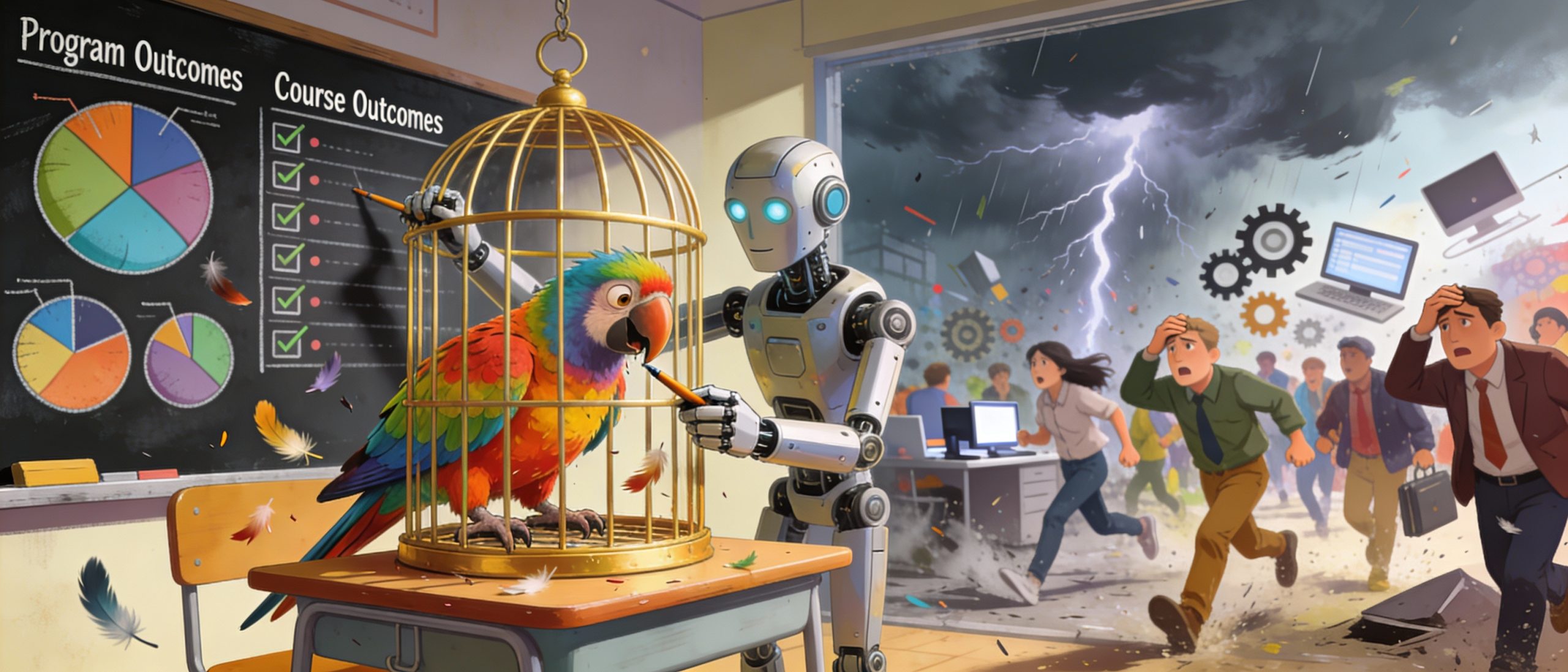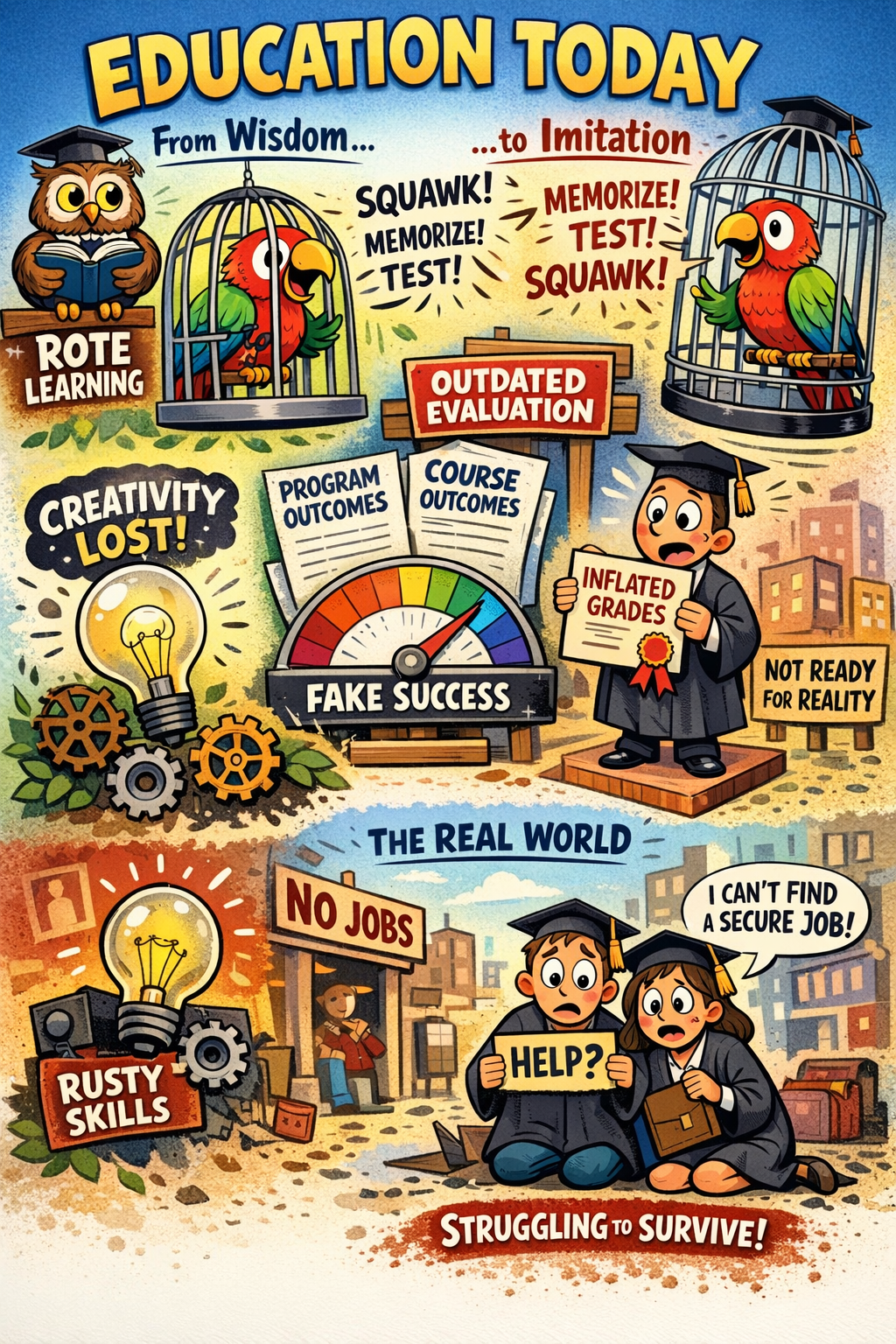
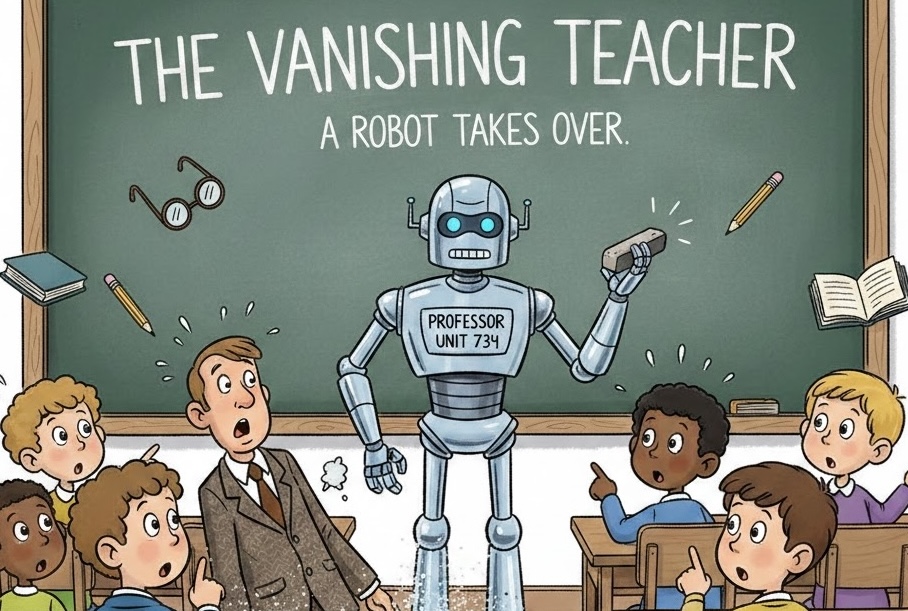
Education today is more about teachers following orders like obedient robots than about encouraging rational thinking. Teachers have become more commercially oriented and are no longer concerned with truly teaching and nurturing students. Instead, they focus on filling out forms and publishing lavish research papers that lack substance. In class, they merely read from slides or PDFs like narrators, instead of teaching students the practical know-how required to sharpen their skills. They distribute question banks and expect students to learn solely from them.
This approach leads students to stop using their reasoning abilities and become addicted to the “candy” of rote learning. They often resent authentic teachers who genuinely teach because such teaching requires them to think. If a generation cannot think, someone else will think for them—and that leads to manipulation and control by AI and others.
Today’s department heads, principals, and management seem concerned only with earning points and maintaining a false image of an educational institution. They appear less concerned about student welfare and more focused on money, reputation, and profit. Institutions are beginning to function more like corporate entities than places dedicated to learning. It has evolved into a business-oriented activity rather than a social service.
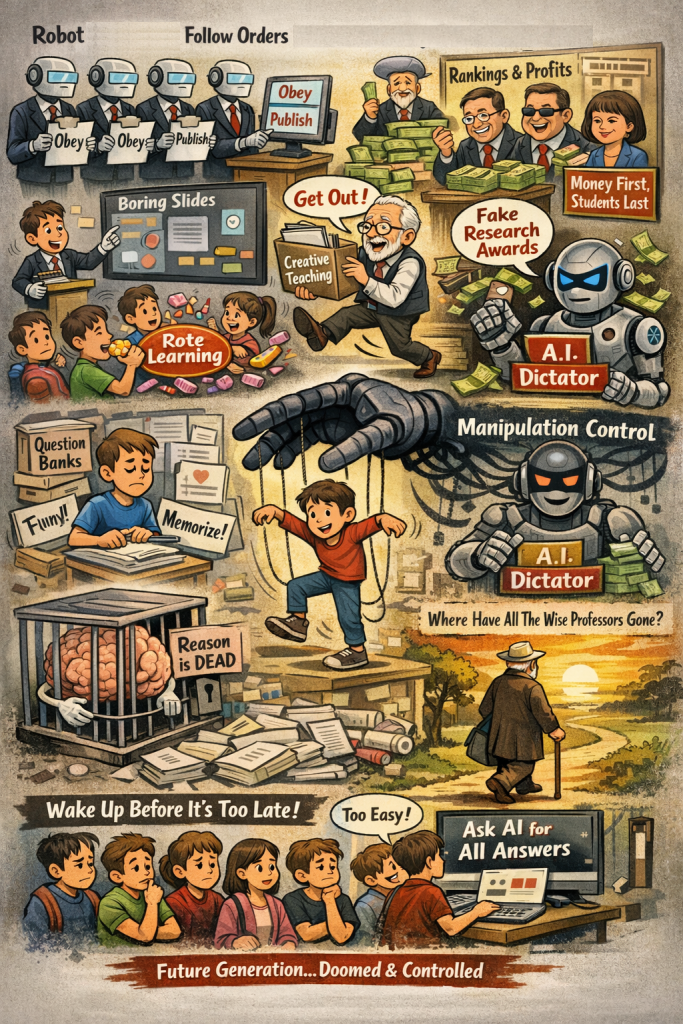
The education space has also become a political minefield of favoritism. A teacher who genuinely teaches well and nurtures students is sometimes treated as a nuisance because rational thinkers are not preferred over professors who simply follow orders—even if they teach poorly and publish research papers with no real-world impact. In many cases, good teachers are shown the door while ineffective ones remain. If this is the state of education, we are doomed for all of the future generations.
Where have all the good old professors gone—those who encouraged students to think outside the box and be creative? It seems that true educators are disappearing, while those motivated primarily by monetary benefits are entering the profession. Today, we need genuinely skilled PhDs and dedicated educators who can contribute meaningfully to the nation’s growth—not merely namesake PhDs.
Unfortunately, in today’s classrooms, AI is not being used effectively. Instead of enhancing critical thinking, it often encourages students to drift away from real-world reasoning. They begin to live in an idealistic bubble, which can ultimately lead to self-inflicted setbacks. Many students would rather pay to borrow intelligence from AI than think for themselves for free.
If people do not open their eyes soon, the next generation may become intellectually passive and easily controlled. It is time to wake up and act.
Disclaimer: For those fuddy-duddies who may misconstrue my views, this article does not reflect any particular institute, school, college, university or country.